 Click To Email
 Call us +1 315 530-1099


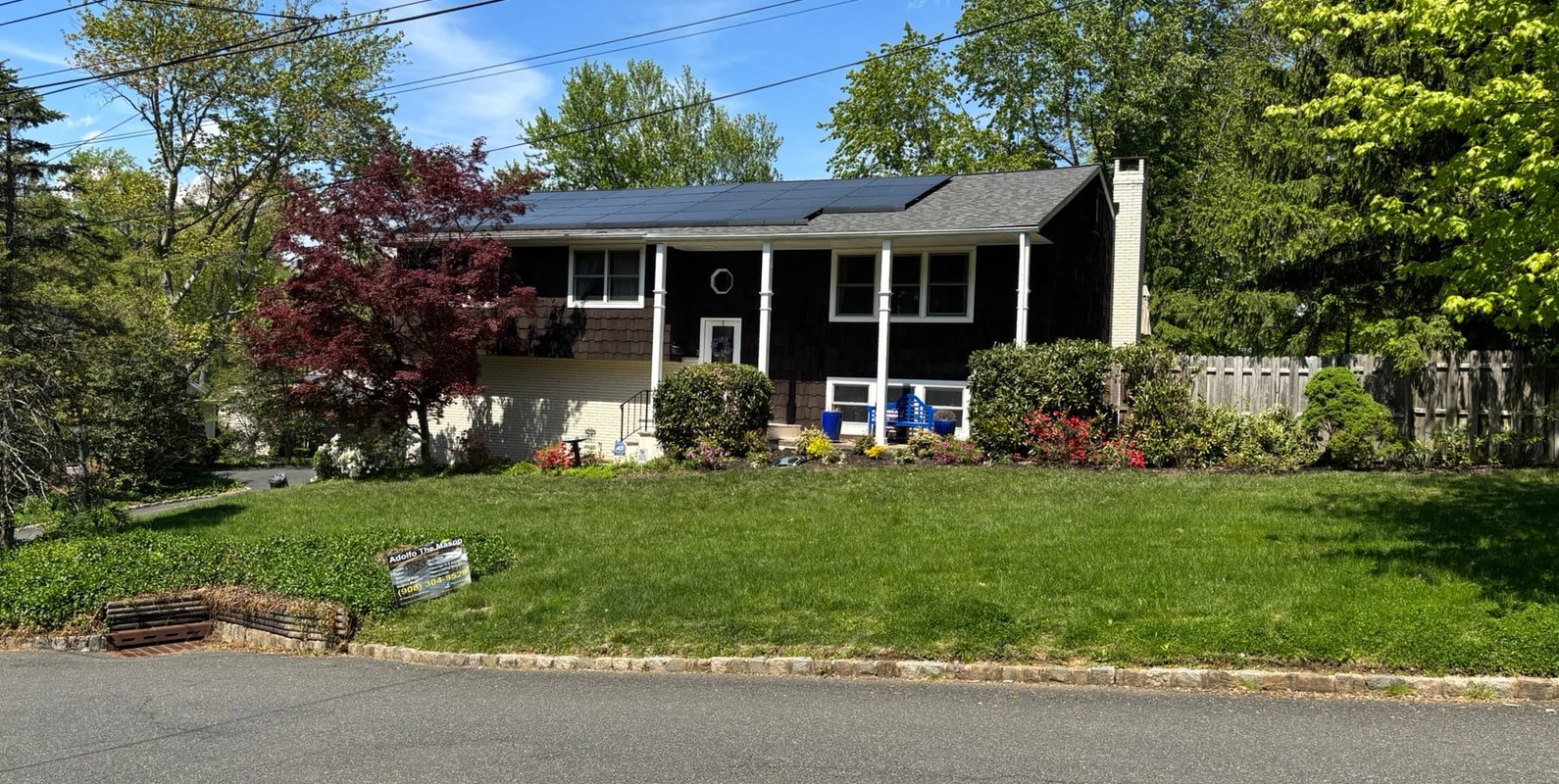
Case Study: Repairing a Sagging roof in Mountainside, NJ

How older roofs sag?
In this NextBLDG case study, we examine a roof structural evaluation in Mountainside, NJ, where a homeowner identified a sagging roof ridge due to cracked beam following a harsh winter. The property—a 1,850 sq. ft. single-family home built in 1960—recently underwent upgrades including a new roof and solar panel installation. While the home was generally in good condition, the inspection revealed a critical structural deficiency in the roof framing system. The structural deficiency was due to the added roof weight from the new roof and solar panels combined with a higher than average snow fall. This highlights the importance of making improvements to current building standards when adding loads to a roof.
How a knot and previous repairs resulted in a cracked ridge beam?
The visible sag along the roof ridgeline prompted a detailed inspection. Key observations included:
- A vertical crack extending over 50% of the ridge beam depth
- Additional horizontal cracking and prior repair attempts
- Evidence of stress in surrounding rafters, including wood deformation
These signs indicated that the ridge beam was overstressed and structurally compromised, no longer capable of safely supporting roof loads.
What Caused the Roof Failure?
Increased Structural Loads
The roof system was subjected to higher-than-original loads due to:
- Roof dead load: ~10 psf
- Solar panel load: ~4 psf
- Snow load: up to ~47 psf (heavy winter conditions)
- Wind/live load: ~20 psf
The addition of solar panels and increased snow accumulation significantly raised the total load demand, pushing the framing system beyond its original design capacity.
The Solution: Engineered Roof Reinforcement Plan
NextBLDG developed a comprehensive, code-compliant solution to strengthen the roof system and improve load distribution throughout the structure. The plan began with replacing the compromised ridge beam with a high-strength 12” x 1.75” x 9.5” Microlam LVL 2.0E beam, spliced with ½” plywood to ensure continuity and restore structural capacity, effectively eliminating roof sagging. To further reduce stress, the unsupported span of the ridge beam is shortened from 12 feet to 6 feet by adding regularly spaced 2×6 Douglas Fir-Larch support studs, significantly decreasing bending forces. Additional stability is achieved by installing 2×4 queen studs approximately 6 feet 10 inches from the ridge beam, providing intermediate support to prevent rafter deflection. Finally, 2×6 collar ties are installed at 16-inch intervals across a 12-foot span, enhancing resistance to wind uplift and improving the overall structural integrity of the roof system. Then checked that the added framing weight is transferred to the foundation.
The Outcome: A Stronger, Code-Compliant Roof System
With these improvements, the upgraded framing system:
- Meets IBC 2021, ASCE 7, and NDS design standards
- Safely supports the weight of the roof, snow, and wind
- Eliminates the risk of further sagging or beam failure
Why Structural Engineering Matters
Without a professional evaluation, issues like these can be repaired but not corrected until significant damage occurs. NextBLDG combines engineering analysis with practical repair design, ensuring that every solution is:
- Code-compliant
- Structurally sound
- Cost-effective and constructible
Conclusion: Proactive Repairs Protect Your Investment
This Mountainside, NJ case study demonstrates how increased loads—combined with aging structural systems—can lead to roof deformation and failure. With the right engineering approach, these issues can be corrected before they escalate into major structural risks.