 Click To Email
 Call us +1 315 530-1099


Case Study: How Improper Remodeling Disrupted a Real Estate Sale in Springfield, NJ

Property Type: Single‑Family Residence Construction: Wood‑framed structure on cinder block foundation Year Built: 1944 Location: Springfield, New Jersey
Background: Structural Concerns Discovered During a HomeSale
During the purchase process of a single‑family home inSpringfield, NJ, the prospective buyer requested a focused structuralevaluation following concerns raised in the home inspection report. Theinspection specifically referenced conditions within the basement related tofloor framing performance. Due to the presence of prior remodeling and plumbingmodifications, the buyer sought an engineering assessment to determine whetherthe conditions represented acceptable construction practices or material structuraldeficiencies.
The findings ultimately played a critical role in disruptingthe real estate transaction until the scope, cost, and severity of repairscould be clearly defined.
Scope of Engineering Evaluation
Nextbldg was engaged to perform a detailed visual structuralinspection limited to basement framing elements identified in Section 10 of thehome inspection report. The review focused on load‑bearing floor joists,bearing conditions, and alterations made as part of prior remodeling work. Theinspection was constrained by site conditions and access but sufficientevidence was available to evaluate compliance with applicable structuralprovisions.
Remodeling‑Related Structural Deficiencies Identified
Improper Floor Joist Bearing and Support
One of the primary findings involved a set of triple 2x10floor joists located near the base of the basement stairwell. These joists wereintended to support an estimated 140 square feet of floor area from the kitchenand potentially portions of the second floor above. At their termination point,the joists were observed to lack proper bearing and support. Evidence of earlyfailure was present, including splintering wood fibers, nail withdrawal, andvisible gaps forming between the joists and the subfloor.
From an engineering standpoint, the configuration did notmeet the requirements of the New Jersey Uniform Construction Code (IRC R502.6),which mandates minimum bearing lengths or approved joist hangers for structuralmembers. The observed conditions indicated that earlier modifications hadaltered load paths without restoring adequate structural support.
Floor Joists Cut and Notched for Plumbing Installation
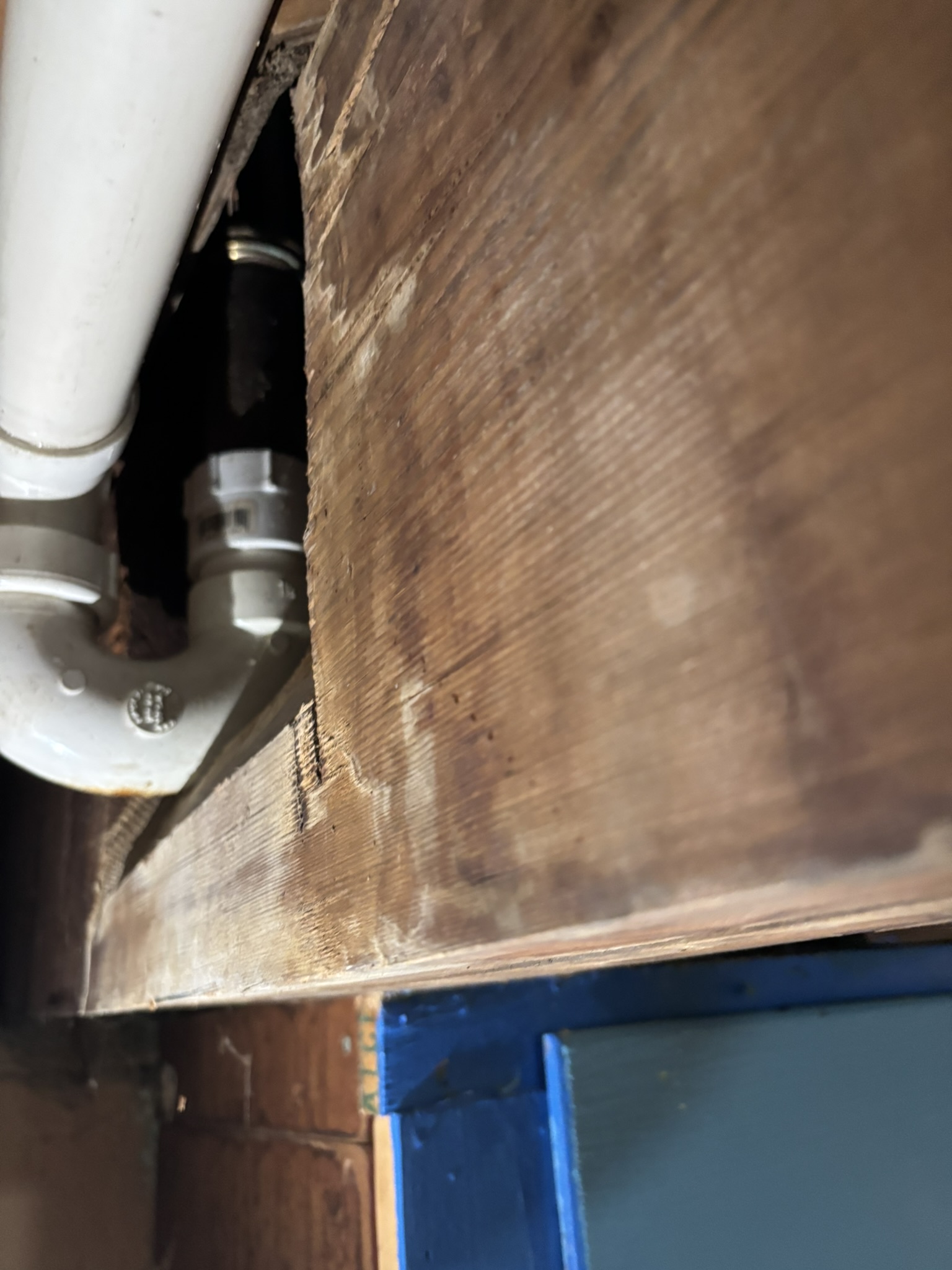
A second critical deficiency involved floor joists beneaththe kitchen and bathroom that had been cut and notched to accommodate plumbinglines during a remodeling project. Multiple repair attempts were evident,including the installation of sister members, blocking, and hangers. However,these repairs were improperly executed.
The modified joists exceeded allowable notching limitspermitted by the building code (IRC R502.8), and the supplemental framingelements failed to restore original load‑bearing capacity. In severallocations, hangers were incorrectly installed, sister joists failed to bearfully on structural supports, and additional notching further reduced membercapacity.
These conditions created a structural vulnerability thatcould not be classified as cosmetic or acceptable under current standards.
Engineering Analysis and Impact on the Sale
The structural deficiencies identified were not attributableto the home’s age or typical settlement, but rather to unpermitted orimproperly executed remodeling work. The modifications altered structuralmembers without maintaining code‑compliant bearing, continuity, or loadtransfer.
Because the deficiencies directly affected primary floorframing, they represented a material issue for the buyer, lender, andpotentially the municipality. Temporary shoring was recommended to preventfurther loss of structural integrity, and permanent corrective repairs werenecessary before the home could be considered structurally compliant.
As a result, the real estate transaction could not proceedwithout addressing the deficiencies or renegotiating terms based on documentedrepair costs.
Repair Scope and Cost Implications
Nextbldg provided estimated cost ranges to assist the buyerand seller in understanding the financial impact of corrective measures.Temporary stabilization was estimated in the range of $1,700 to $3,000.Permanent repairs to restore original structural capacity—potentially includingjoist replacement, re‑routing of plumbing, and correction of floor sag—wereestimated to range between $6,000 and $8,000, with additional basementstructural repairs projected between $4,000 and $6,000.
These estimates were instrumental in shaping negotiationsand determining next steps in the transaction.
Why Engineering Review Matters in Real EstateTransactions
This case illustrates a common but often overlooked risk inresidential sales: structural deficiencies introduced during remodelingprojects. While renovations may improve aesthetics or functionality, changes toframing, plumbing, or mechanical systems can inadvertently compromise load‑bearingelements if not properly designed and executed.
A Professional Engineer evaluation provides objective, code‑basedanalysis that distinguishes between acceptable conditions and true structuralrisk. In real estate transactions, this clarity helps all parties make informeddecisions backed by documented engineering findings.
Nextbldg’s Role in Providing Clarity
Nextbldg’s evaluation delivered clear identification of non‑compliantconditions, explained the engineering implications of past remodelingdecisions, and outlined realistic repair paths. The resulting report providedessential documentation for buyers, sellers, and professionals involved in thetransaction, ensuring that decisions were based on structural performancerather than assumption.
Final Thoughts
Structural issues discovered during a real estatetransaction can be disruptive—but they are best addressed early with accurateengineering insight. In this case, prior remodeling introduced deficienciesthat materially impacted the home’s structural integrity and paused the saleuntil corrective measures could be evaluated.
When remodeling history is uncertain or structural concernsarise during due diligence, a professional engineering assessment can be thedifference between a delayed transaction and an informed path forward.