 Click To Email
 Call us +1 315 530-1099


Case Study: Post‑Winter Structural Evaluation of a Townhome in Manlius, NY

Project Type: Residential Townhome Construction: Wood‑framed structure over masonry foundation Year Built: 1989 Scope: Visual structural inspection
Background: Why the Inspection Was Requested
Following a particularly demanding winter season, the owner of a townhome in Manlius, New York requested a professional structural evaluation due to several interior conditions that had become more noticeable over time. The primary concerns included cracks forming along ceiling ridges in the stairwell and second‑floor bedroom, separation along sheetrock seams near exterior walls, and a perceived unevenness in the floor of a rear bedroom. While no single condition appeared severe on its own, the homeowner sought clarity on whether these changes represented normal building behavior or signs of structural concern.
Inspection Scope and Methodology
The inspection consisted of a visual assessment of accessible structural and architectural components, conducted in accordance with standard residential engineering practice. Interior areas examined included wall surfaces, ceilings, floor planes, and window openings, while exterior observations focused on visible foundation areas, wall conditions, rooflines, and garage elements. No finishes were removed and no destructive testing was performed. Observations reflect conditions present at the time of the visit and were evaluated in the context of the home’s age, construction type, and exposure.
Interior Ceiling and Wall Cracks
Cracking was observed along ceiling ridges and at sheetrock seams in areas that align with exterior wall exposure. In contrast, interiorwalls and ceilings with limited or no exterior exposure did not exhibitcomparable cracking. From an engineering standpoint, this pattern is consistentwith thermal expansion and contraction of materials responding to seasonaltemperature fluctuations. Following freeze‑thaw cycles, it is common for finishes in exposed locations to experience stress that results in visible cracking, particularly in homes of this vintage.
Based on the crack characteristics and location, these conditions were determined to be cosmetic rather than structural in nature. No framing movement or load‑related distress was evident. Cosmetic repair may be performed at the homeowner’s discretion, but no structural intervention was warranted.
Cracks Around Windows and Evidence of Settlement
Hairline cracks were noted around several window openings within the home. These cracks showed no displacement, offset, or widening over their length. In buildings of this age, minor settlement over time is expected as soils consolidate and materials adjust under sustained loading. The observed cracking was consistent with this type of long‑term, non‑progressive settlement behavior.
From an engineering perspective, there was no indication that settlement was ongoing or accelerating. As a result, repair of these cracks is considered optional and cosmetic. Periodic monitoring on an annual basis was recommended to confirm that conditions remain stable.
Uneven Floor in Second‑Floor Bedroom
An area of floor slope was observed in a rear second‑floor bedroom, where the surface sloped slightly away from a shared wall. Thecondition was noticeable but subtle, and no associated cracking, foundation distress, or framing damage was observed in accessible areas below. Thefoundation walls visible from the exterior appeared to be in good condition,with no signs of structural cracking or displacement.
At the time of inspection, no definitive structural cause could be identified, and the floor condition did not present a safety hazard. Given the localized nature of the slope and the absence of corroborating structural indicators, monitoring was recommended. Should the slope increase over time or present a tripping concern, additional evaluation could be performed to determine next steps.
Separation Between Foundation and Sill Plate at Garage
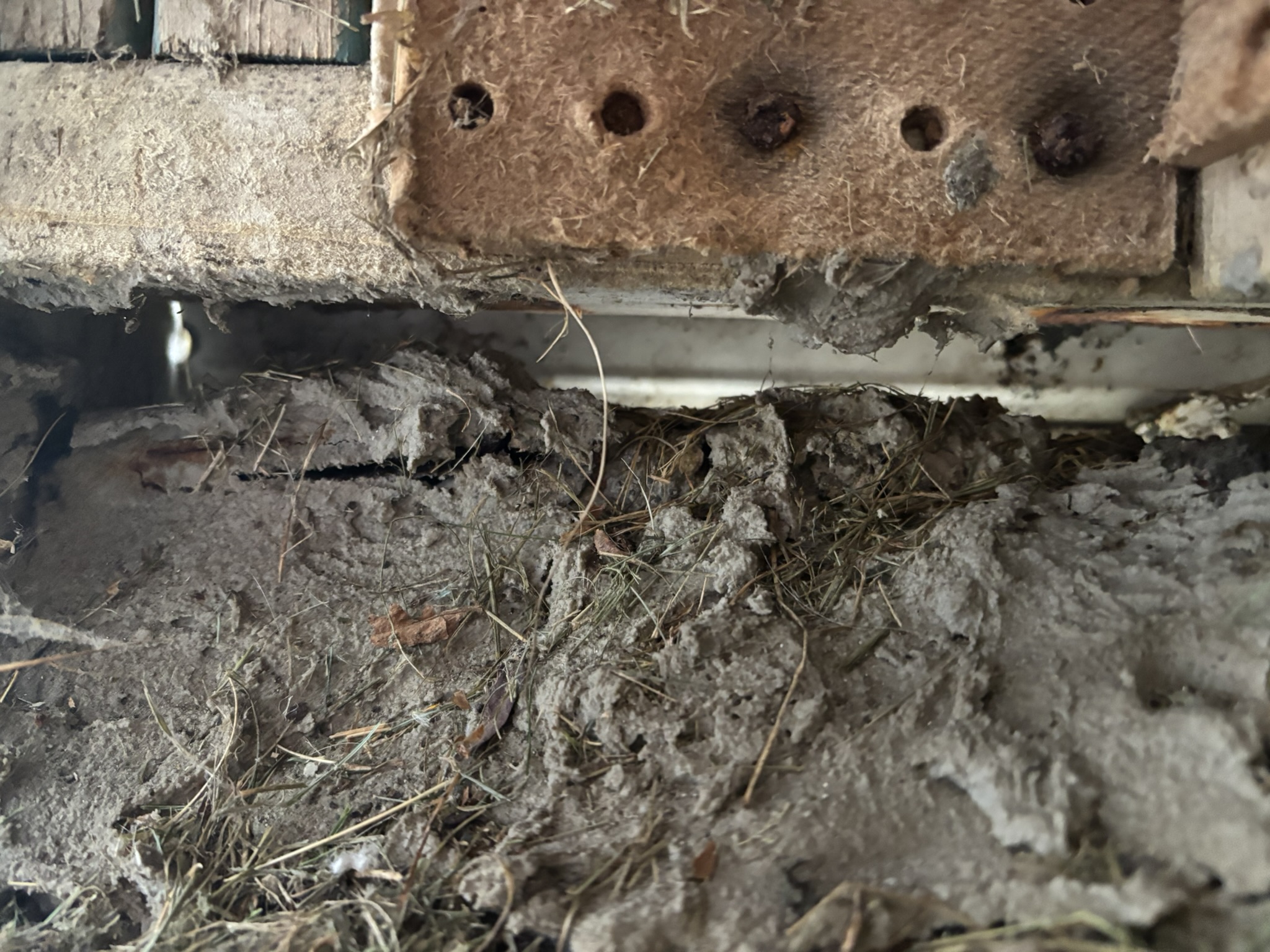
One condition requiring proactive attention was observed at the lower left side of the garage, where a separation existed between the foundation and sill plate. Evidence suggested that a metal component may have deteriorated or corroded over time, contributing to the gap. While localized this separation affects the interface between the structure and its foundation and may allow moisture intrusion, pest entry, or long‑term deterioration of wood components.
From a structural durability standpoint, repair is recommended to restore continuity and protect the sill assembly. A qualified mason was advised to address the footing and sill interface to maintain long‑term performance.
Garage Interior Pier and Beam Interface
Inside the garage, a crack was observed at the interface between a cinderblock pier and the foundation wall. The cracking pattern was consistent with minor settlement rather than structural failure. No signs of active movement or distress were observed elsewhere in the garage framing or foundation.
Given the stable appearance of the condition, ongoing observation was recommended. Annual visual checks will help confirm that the condition remains unchanged.
Overall Structural Condition
Despite the concerns that prompted the inspection, the townhome was found to be in overall good structural condition and well-maintained. The majority of observed issues were attributable to normal building behavior, seasonal thermal movement, and minor historical settlement typical for a wood‑framed townhome constructed in the late 1980s. Only one condition—the separation at the garage sill plate—required corrective repair to preserve structural durability.
Why Engineering Evaluation Matters After Winter
This case illustrates a common challenge that arises after harsh winters: distinguishing between cosmetic symptoms and meaningful structural concerns. Cracks, unevenness, and separation can appear alarming without proper context, yet many are part of normal material behavior. A licensed Professional Engineer evaluates not just what is visible, but how the structure is performing as a system, allowing homeowners and buyers to make informed decisions without unnecessary repairs.
How Nextbldg Supported This Evaluation
Nextbldg provided an independent engineering assessment focused on performance, risk, and long‑term durability rather than assumptions. The evaluation offered clear explanations of observed conditions, identified which items required repair versus monitoring, and delivered documentation suitable for homeowner records and future planning. This approach ensures that clients receive clarity, not speculation.
Final Thoughts
Winter conditions often reveal how a building responds to stress rather than creating new problems outright. In this case, the inspection confirmed that most concerns were cosmetic or expected for the structure’s age, while one localized condition was identified early enough to be addressed efficiently. When post‑winter changes raise questions, a professional engineering evaluation can provide the certainty needed to move forward with confidence.