 Click To Email
 Call us +1 315 530-1099



Case Study: Engineering Inspection During a Home Purchase in Clark, NJ

Understand What Really Matters Before You Buy
Buying a home in Clark, NJ?
If your home inspection flagged foundation cracks, settling, or structural concerns, you’re probably asking:
- Is this serious or cosmetic?
- Will this cost me thousands later?
- Should I move forward or renegotiate?
👉 A standard home inspection identifies issues.
👉 An engineering inspection tells you what those issues actually mean.
What Does a Real Inspection Look Like?
At a recent property in Clark, NJ, a buyer requested a structural evaluation after a home inspection flagged multiple issues. The home itself, built in 1981, was generally well maintained and structurally typical for the area, with a wood-framed structure on a concrete foundation and a retaining wall supporting the yard due to sloped terrain. On the surface, nothing appeared alarming. However, the reason an engineering inspection was requested was a common concern: visible cracks in the foundation and signs of movement that raised questions about long-term stability.
Are these structural concerns active risks—or stable past conditions?
What was Found in the Engineering Inspection?
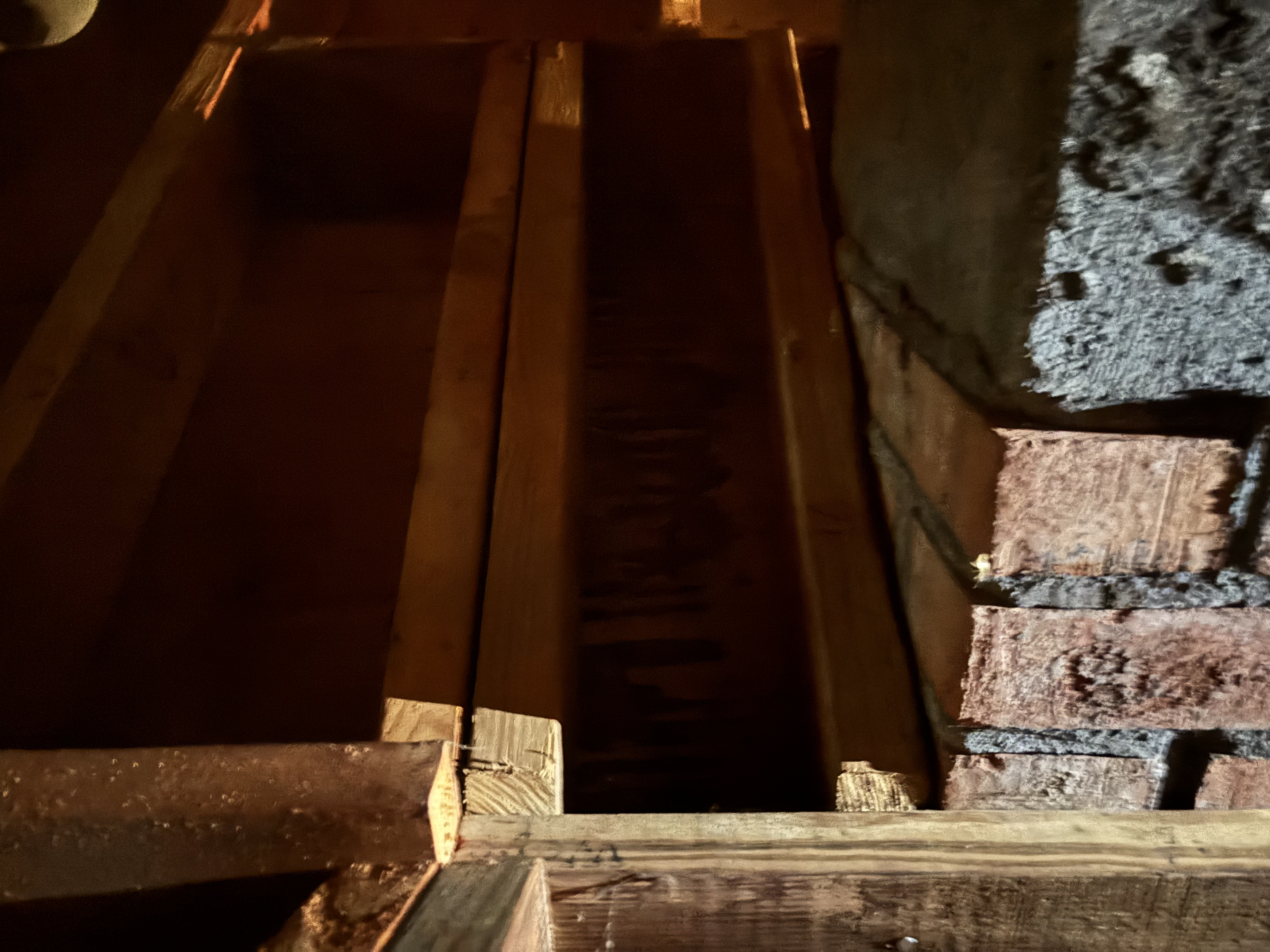
During the engineering inspection, several conditions were identified, but the key lies in how each issue was interpreted rather than simply listed. The foundation showed visible cracking along the left side and rear of the home, with exterior signs of settlement; however, the absence of interior cracking indicated that the movement was likely historical and not actively progressing. Based on this judgment, the appropriate approach was a targeted repair—sealing the cracks to prevent water intrusion—combined with monitoring over time rather than immediate structural intervention. In contrast, the roof framing revealed a more serious concern, including a cracked rafter and inadequate support around the chimney, which was not compliant with building code. Here, the engineering judgment prioritized structural load risk, leading to a recommendation for immediate repair despite the relatively modest cost. Finally, the retaining wall showed minor surface cracking but no bowing or movement, indicating that it is currently performing as intended; therefore, no repair was required beyond periodic monitoring. Collectively, these findings demonstrate that engineering inspections are less about identifying problems and more about determining which conditions require action, which can be managed, and which should simply be observed over time.
Why This Matters for Home Buyers
For most home buyers, the instinct is to assume that more visible issues automatically mean a bigger problem, but engineering inspections approach things very differently. The real focus is prioritization, not just identification—understanding which issues actually impact the structure and which ones are manageable or historical. Some conditions, like foundation cracks, may look serious but turn out to be stable, while others, like subtle framing defects, may pose a more immediate risk. This distinction directly affects your financial exposure, repair planning, and negotiation strategy during a real estate transaction. An engineering inspection provides clarity by determining whether issues are active or stable, helping buyers separate cosmetic concerns from structural risks and avoid unnecessary spending or overlooked problems. Ultimately, the value isn’t just in the findings—it’s in having the confidence to move forward, renegotiate, or walk away based on informed judgment rather than assumptions.